
Text to Image
Philosophical Infographic Machine Generator — AI Image Prompt
A sophisticated prompt using a code-like structure to visualize abstract philosophical concepts as magnificent machines or diagrams.
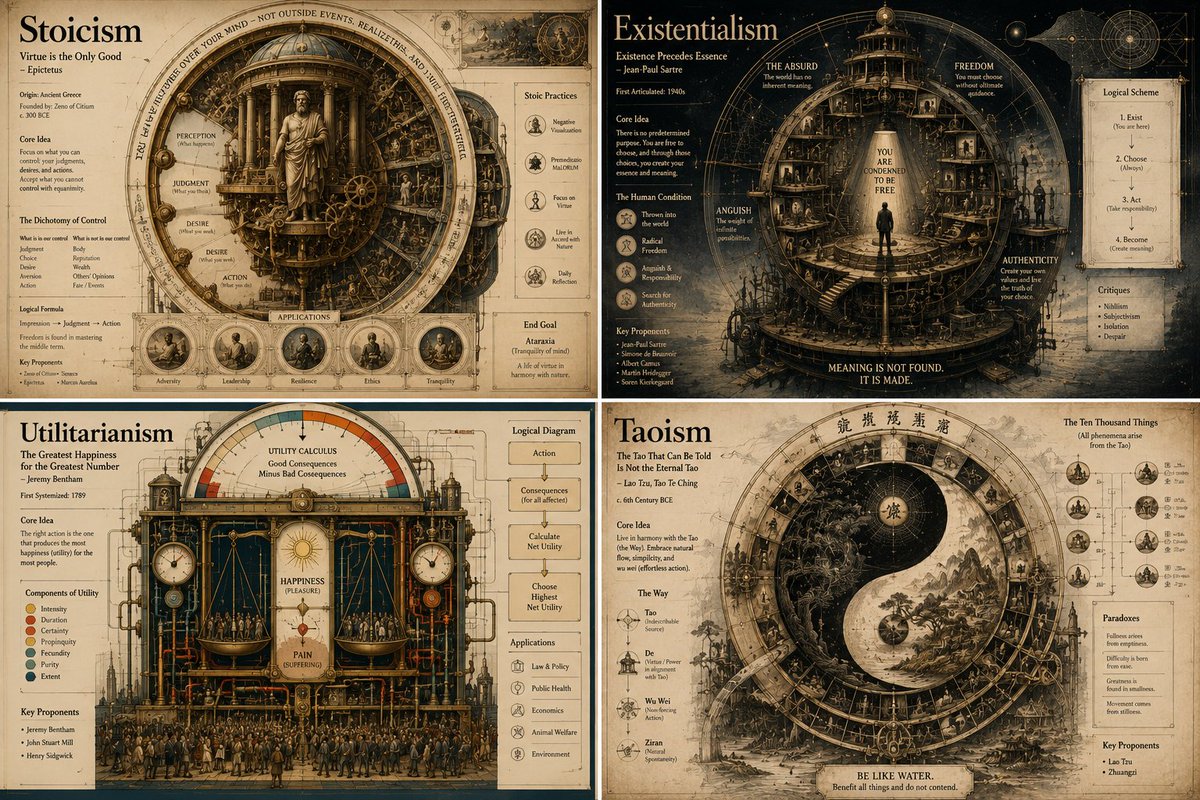
Prompt
2x2 grid, 16:9, do this for 4 famous philosophies: class Philosophical_Idea_Machine_DNA: def __init__(self): self.subject = "{argument name="subject" default="[PHILOSOPHY / CONCEPT / PARADOX]"}" self.parents = { "composition_parent": "Renaissance memory theatre — wheels within wheels, concentric knowledge rings, symbolic emblems", "atmosphere_parent": "Alchemical manuscript — cryptic imagery, lunar light, sepia and oxidized copper tones", "graphic_parent": "Bauhaus conceptualism — elemental shapes as thought-forms, clean lines, primary colour logic", "detail_parent": "Encyclopédie plate — mechanical cross-sections of ideas, gears of dialectic, part numbering" } self.mutations = { "medium_mutation": "Printed layers of translucent vellum overlays that build the idea when viewed together", "information_mutation": "Logical syllogisms as circuit diagrams, historical proponents as constellation maps, glossary of terms", "semantic_mutation": "The abstract idea becomes a physical, inhabitable clockwork universe", "scale_mutation": "A single logical step unfolds into a complete microcosmic city where the idea is lived reality" } self. style_mix = { "composition_parent": 0.25, "atmosphere_parent": 0.20, "graphic_parent": 0.30, "detail_parent": 0.15, "mutations": 0.10 } def generate_subject(self): subject = """ Create a vertical luxury infographic poster that gives physical form to [SUBJECT]. Invent a magnificent symbolic machine, diagram, or architecture that represents the idea. Explode its layers to show internal logic, historical influences, counterarguments, and real-world manifestations. The design must feel like a transmission from a library that exists outside time. Semantic inference should render the intangible tangible with intellectual rigour. """ return render( subject, style_mix=self. style_mix, format="vertical poster, conceptual infographic", typography=""" Large title: {argument name="concept name" default="[CONCEPT NAME]"} Subtitle: [ORIGIN / PHILOSOPHER / MAXIM] Microtext: [LOGICAL FORMULA / CITATION / FIRST USE DATE / LATIN TERM] """, composition=""" Mandala-like symmetry or dynamic tension depending on concept nature. Clear visual hierarchy, meditative spacing. """, lighting=""" Illumination from unseen source — like a page from a sacred text held to candlelight. """, constraints=""" No trite symbols (lightbulbs for ideas, etc.). No pseudo-profound emptiness. """ )3a:Tb97,2x2Prompt breakdown
- Subject
- 2x2 grid of four famous philosophies rendered as exploded symbolic machines or architectures via the Philosophical_Idea_Machine_DNA class
- Style
- Renaissance memory theatre concentric rings blended with alchemical sepia manuscripts, Bauhaus elemental shapes, Encyclopédie mechanical cross-sections, and mutations of translucent vellum overlays plus circuit syllogisms
- Lighting
- Illumination from an unseen source like candlelight on a sacred text page
- Composition
- Mandala-like symmetry or dynamic tension across vertical luxury infographic posters in 16:9 2x2 grid with clear hierarchy and meditative spacing
- Mood
- Transmission from an atemporal library rendering abstract ideas as inhabitable clockwork universes with intellectual rigour
Remix ideas
- Change the subject argument default to target a specific paradox and adjust microtext for its Latin term citation
- Raise the graphic_parent weight to 0.40 in style_mix to strengthen primary colour logic across the Bauhaus elements
- Add a scale_mutation variant that unfolds one syllogism step into a full microcosmic city diagram layer
Reference images
How to use this AI Image prompt template
 1
1Copy the prompt — grab this template’s prompt and negative prompt.  2
2Pick a model — choose a recommended AI model for the best match.  3
3Generate — open the studio with one click and create your result.
Related templates
Exploded View Invention Infographic
2x2 grid, do this for tesla coil (invention) and 3 other famous inventions. 16:9 inventor_content = ( patent_drawing_recreation_in_isometric_exploded_view_of_[invention (invention placeholder)]_by_[inventor (inventor placeholder)] * 1.7 ) + ( historical_context_timeline_of_scientific_breakthroughs_leading_to_[invention] * 1.5 ) + ( failure_log_and_iteration_cards_showing_[inventor]_s_failed_prototypes_with_annotations * 1.6 ) + ( cross_section_and_mechanics_diagram_of_[invention]_with_material_callouts * 1.4 ) + ( economic_and_cultural_impact_ripple_map_of_[invention]_on_society * 1.3 ) + ( quirky_personal_habit_or_workshop_inserts_from_[inventor]_s_biography * 1.2 ) + ( modern_day_derivative_technologies_tree_from_[invention] * 1.1 ) + ( common_misconception_busting_panel_about_who_really_invented_[invention] * 1.0 ) - ( romanticized_lone_genius_cliché_without_team_context / 3.0 ) - ( boring_textbook_engraving_style_instead_of_dynamic_infographic / 2.9 ) - ( eurocentric_filter_if_invention_originated_elsewhere / 3.2 )3
3D Cutaway Volcano Diagram
A 3D cutaway diagram of a volcano, showing its internal structure. The diagram should clearly label the magma chamber, conduit, throat, crater, and layers of ash and lava. The style should be a clean, technical illustration, with realistic textures for the rock and magma. This demonstrates the ability to generate accurate, science-based visuals for educational purposes, requiring strong spatial and scientific reasoning. –ar 16:9
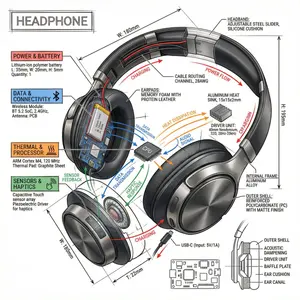
Technical Infographic Prompt Template - Nano Banana Pro AI Prompt for Infographic / Edu Visual
Create a technical infographic of OBJECT (object) with a 45-degree isometric 3D perspective showing the device slightly tilted to reveal depth and dimension. Combine a realistic photoreal render with black ink technical annotations on pure white background. Include: Key component labels with color-coded callout boxes Internal component visibility through transparent/cutaway sections Measurements, dimensions, and precise scale markers Material callouts and quantities Color-coded arrows for function/flow: RED (power/battery), BLUE (data/connectivity), ORANGE (thermal/processor), GREEN (sensors/haptics) Simple schematics or cross-sectional diagrams where relevant Place “OBJECT” title in a hand-drawn technical box (top-left corner). Style: Black linework (technical pen/architectural), sketched but precise. Object remains clearly visible. Educational museum-exhibit vibe. Clean composition, balanced negative space. Perspective: Isometric 3D angle—tilted to show depth, dimension, and internal architecture dramatically. Like a professional product teardown or engineering manual. Colors: ~10-15% accent density. Black dominant. White background. Output: 1080×1080, ultra-crisp, social-feed optimized.3e:T4da
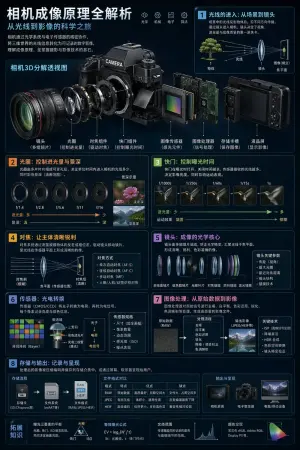
Camera Imaging Technology Infographic
Create a infographic image of Camera Imaging Technology Infographic. Style: photorealistic. Composition: balanced and well-framed. Lighting: natural with cinematic mood. Category: illustration. Reference: camera-imaging-technology-infographic-14344.
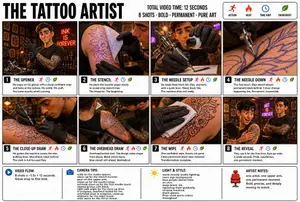
Tattoo Artist Storyboard Infographic
Create a game image of Tattoo Artist Storyboard Infographic. Style: photorealistic. Composition: balanced and well-framed. Lighting: natural with cinematic mood. Category: illustration. Reference: tattoo-artist-storyboard-infographic-25946.

3D Printer Works Diagram
A clear and simple diagram explaining how a 3D printer works (FDM technology). The diagram should show the filament being fed into the extruder, the heating element, and the nozzle depositing the material layer by layer to build an object. The style should be a clean, 3D-esque illustration with arrows showing the process flow, demonstrating the ability to explain complex technology simply. –ar 16:9
Explore more prompts
Browse more AI image and video prompts by category.
FAQ
- What layout and typography are enforced for the four philosophies?
- A 16:9 2x2 grid of vertical posters, each with large concept name title, origin/philosopher subtitle, and microtext for logical formulas or first-use dates.
- How does the prompt ensure non-generic philosophy visuals?
- By mandating exploded layers of dialectic gears, vellum build-ups, constellation maps of proponents, and explicit bans on trite symbols like lightbulbs.
- Is the Philosophical Infographic Machine Generator prompt free to use?
- Yes, this prompt is completely free on AI Pin Maker and you can copy it directly with no signup or payment required.
- How do I use the Philosophical Infographic Machine Generator prompt to generate an image or video?
- Copy the prompt, tweak the subject or style to fit your idea, then paste it into AI Pin Maker and generate your image or video in one click.
- Can I change the Philosophical Infographic Machine Generator prompt into my own version?
- Absolutely, just replace the subject, style, or parameters in AI Pin Maker to make the prompt entirely your own.