
Step 1
Describe the subject and styling
Describe the subject in one sentence and request soft enamel styling: bold raised outlines, recessed flat colors.
Generate soft enamel pin concepts tuned for the process — recessed colors, raised metal lines, budget-friendly runs — with specs a factory can quote directly.
Design Soft Enamel Pins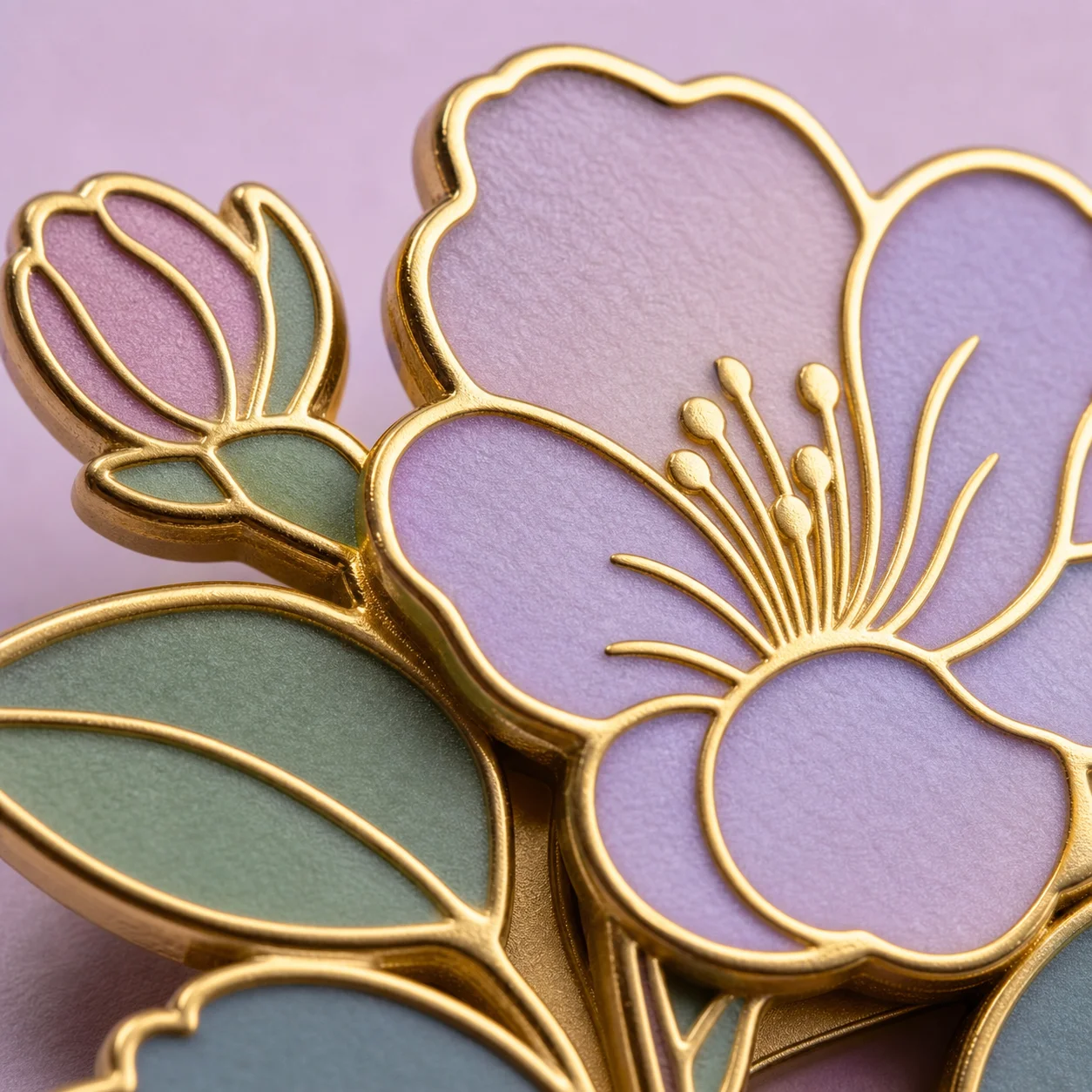
How it works
Step 1
Describe the subject in one sentence and request soft enamel styling: bold raised outlines, recessed flat colors.
Step 2
Cap the palette at four to six colors — each extra color adds cost in the soft enamel process.
Step 3
Keep every color cell fully enclosed by metal lines; open or floating color is where soft enamel orders fail.
Step 4
Generate variants and pick the design whose linework still reads at final size (most pins run 25-45mm).
Step 5
Choose plating — gold, silver, black nickel, or rainbow — as part of the concept, since the metal is visible everywhere.
Step 6
Export the concept with a quote-ready brief: size, plating, color codes, backing style, and optional epoxy coating.
Why use it
Soft enamel fills color into recessed cells between raised metal lines and leaves them slightly below the metal surface — you can feel the ridges when you run a finger across the pin. That texture is the signature: designs read as crafted and dimensional, colors sit vivid inside crisp metal borders, and the process costs noticeably less per unit than hard enamel, which is why most first runs and convention pins are soft enamel.
The AI Pin Maker soft enamel workflow generates concepts that exploit the process instead of fighting it: bold metal linework that becomes the raised ridges, color cells sized for clean fills, and palettes within the four to six colors that keep quotes friendly.
FAQ
No — it is a different finish, not a lesser one. The recessed, textured look is a deliberate aesthetic choice that many collectors prefer, and it photographs with more depth than flat hard enamel.
Usually yes. Lower unit cost makes the inevitable first-run lessons cheaper, and the process is forgiving on color separation. Move to hard enamel when you want the flat jewelry finish.
A clear dome poured over the pin face that protects recessed colors from scratching. Optional — it trades the signature texture for durability, useful for pins that will live on bags.
Technically many, but every color raises cost. Four to six reads rich while keeping quotes friendly; the generator caps concepts accordingly unless you ask otherwise.
Keep Exploring