
Text to Image
Notebook Slides With Reference Character — AI Image Prompt
Creates an 8-slide Japanese notebook-style educational deck using a provided character sheet as a consistent presenter mascot. - AIPinMaker
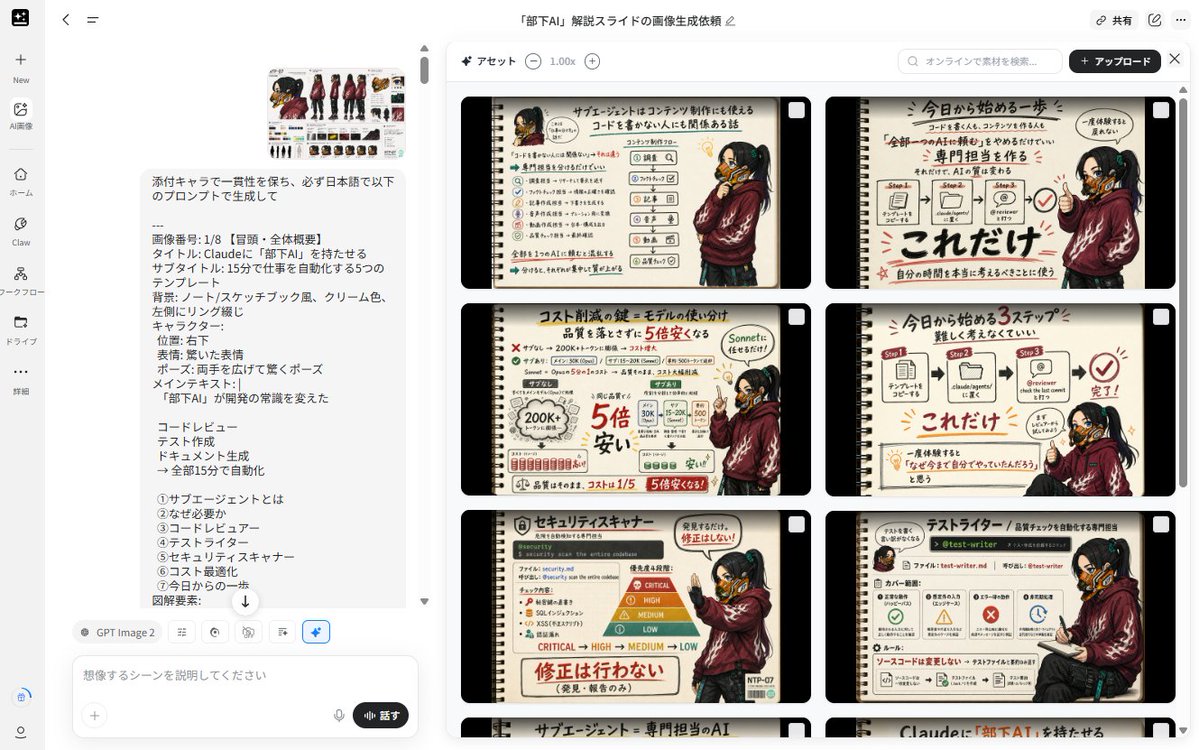
Prompt
Using REFERENCE_0 as the character base, create a consistent set of exactly 8 Japanese educational slide images about {argument name="topic" default="Claudeに『部下AI』を持たせる"}. Keep the character design, outfit, mask, hairstyle, and cyberpunk details consistent with the reference, but redraw the character in new poses and expressions for each slide.

Overall format: Each slide should look like a hand-drawn notebook/sketchbook page with a cream paper background, black rounded outer frame, left-side spiral binding, marker-style Japanese handwriting, red emphasis marks, arrows, check marks, small icons, and simple workflow diagrams. Use a warm analog note-taking style rather than a clean corporate deck. Maintain the same slide design language across all 8 images.

Character placement: Place the character as a presenter/mascot on the right side or lower-right area of most slides. Vary the pose naturally: surprised with both hands open, pointing at diagrams, holding a clipboard, sitting while reviewing, making an OK/check gesture, or explaining with one raised finger. Preserve the reference character’s identity and clothing.

Generate exactly these 8 slide topics:
1. Opening / overall overview: Title text {argument name="headline text" default="Claudeに『部下AI』を持たせる"}; subtitle {argument name="subtitle text" default="15分で仕事を自動化する5つのテンプレート"}; main message: 「部下AI」が開発の常識を変えた; include the five automation examples: コードレビュー, テスト作成, ドキュメント生成, 全部15分で自動化, and a simple checklist-like layout.
2. What is a sub-agent: Explain 「サブエージェントとは」 as a reusable AI role or specialist assistant. Include small role cards and arrows showing a main Claude agent delegating tasks.
3. Why it is needed: Explain 「なぜ必要か」 with a before/after comparison, emphasizing that repeatedly asking AI for the same tasks is inefficient and can be turned into templates.
4. Code reviewer: Title 「コードレビュー」; show a GitHub/code review style flow with files, comments, bugs, and a check mark.
5. Test writer: Title 「テストライター」; show a test-generation workflow with steps, file names, unit tests, and pass/fail style icons.
6. Security scanner: Title 「セキュリティスキャナー」; show risk levels CRITICAL, HIGH, MEDIUM, LOW and emphasize that the agent detects issues but does not automatically fix them.
7. Cost optimization: Title 「コスト削減の鍵:モデルの使い分け」; show a comparison that cheaper/smaller models can handle simple checks and that costs can become much cheaper, with bold red savings notes.
8. Start today / summary: Title 「今日から始める一歩」; show a simple 3-step process: create a template, place it in a Claude agents folder or workflow, ask for review/automation, then mark it complete with a big check.

Text style: Use Japanese text throughout. Make headlines large and bold, with red underlines and handwritten annotations. Keep diagrams simple and readable. Use only the listed 8 slide topics and do not add extra slides.

Constraints: Keep the same notebook layout, cream color palette, black border, left spiral binding, and consistent character identity across every image. Avoid photorealism, avoid 3D rendering, avoid watermarks, and do not change the character into a different person.39:Td87,Using REFERENCE_0 as the character base, create a consistent set of exactly 8 Japanese educational slide images about {argument name="topic" default="Claudeに『部下AI』を持たせる"}. Keep the character design, outfit, mask, hairstyle, and cyberpunk details consistent with the reference, but redraw the character in new pPrompt breakdown
- Subject
- eight Japanese notebook slides on Claude sub-agents for code review, test writing, security scanning and cost optimization, using one consistent cyberpunk-masked reference character in varied poses
- Style
- hand-drawn sketchbook pages with cream paper, black rounded frame, left spiral binding, marker Japanese handwriting, red emphasis marks, arrows and simple workflow diagrams
- Composition
- character mascot placed on right or lower-right of each slide with diagrams, checklists and text blocks on the left, maintaining identical slide layout across all eight images
- Mood
- warm analog note-taking style for educational Japanese content
Remix ideas
- swap the reference character’s cyberpunk mask color while keeping outfit and hairstyle fixed
- replace the security scanner slide risk levels with a different workflow diagram
- add extra red savings callouts to the cost optimization slide without changing the notebook frame
Reference images
How to use this AI Image prompt template
 1
1Copy the prompt — grab this template’s prompt and negative prompt.  2
2Pick a model — choose a recommended AI model for the best match.  3
3Generate — open the studio with one click and create your result.
Related templates
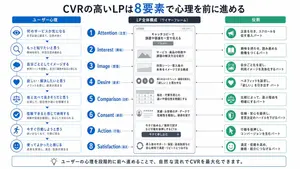
Japanese LP Psychology 8-Step Infographic
{"type":"Japanese marketing infographic","topic":"high-converting landing page structure guided by user psychology","style":{"look":"clean flat business infographic","palette":{"primary":"blue","secondary":"green","neutral":"white and light gray","accent":"dark navy headline with one highlighted blue numeral"},"background":"plain white","lines":"thin gray connectors and borders","icons":"simple circular line icons in blue and green","aspect_ratio":"16:9 landscape"},"headline":{"text":"CVRの高いLPは{argument name=\"number of elements\" default=\"8\"}要素で心理を前に進める","position":"top center","emphasis":"the numeral is large and bright blue"},"layout":{"columns":3,"sections":[{"title":"ユーザー心理","position":"left column","count":8,"items":[{"index":1,"icon":"eye","label":"何のサービスか気になる","subtext":"まずは目に留まり、注意が向く"},{"index":2,"icon":"magnifying glass","label":"もっと知りたいと思う","subtext":"興味を持ち、内容を読み進める"},{"index":3,"icon":"thought cloud","label":"自分ごととしてイメージする","subtext":"利用シーンを想像し、自分に関係があると感じる"},{"index":4,"icon":"heart","label":"欲しい・解決したいと思う","subtext":"メリットを感じ、欲求が高まる"},{"index":5,"icon":"balance scale","label":"他と比べて良さそうだと思う","subtext":"比較して、優位性や違いを理解する"},{"index":6,"icon":"check mark badge","label":"信頼できると感じて納得する","subtext":"根拠や実績を確認し、安心して決められる"},{"index":7,"icon":"running person","label":"今すぐ行動しようと思う","subtext":"迷いがなくなり、行動に移る"},{"index":8,"icon":"smiling face","label":"使ってよかったと感じる","subtext":"成果を実感し、満足・信頼が深まる"}]},{"title":"LP全体構成(ワイヤーフレーム)","position":"center column","count":8,"items":[{"index":1,"label":"Attention(注意)","wireframe":"logo at top, main hero block with headline and CTA button","text":"キャッチコピーで課題や価値を一言で伝える"},{"index":2,"label":"Interest(興味)","wireframe":"image placeholder and text block","text":"サービス・商品の特徴や課題の解決方法を紹介"},{"index":3,"label":"Image(想像)","wireframe":"wide image placeholder","text":"利用シーン・導入後の未来をイメージできる構成"},{"index":4,"label":"Desire(欲求)","wireframe":"three small circular icons and text","text":"得られるベネフィット/価値を提示し『欲しい』と思わせる"},{"index":5,"label":"Comparison(比較)","wireframe":"comparison table grid","text":"他社・代替手段との違いや優位性を明確にする"},{"index":6,"label":"Consent(納得)","wireframe":"star rating, avatar, testimonial lines","text":"実績・お客様の声・データで信頼性を補強し、納得を促す"},{"index":7,"label":"Action(行動)","wireframe":"large CTA area with dark button","text":"今すぐ始める/無料で試すなど行動を後押しするCTA"},{"index":8,"label":"Satisfaction(満足)","wireframe":"circular arrow support icon and text","text":"導入後のサポート・保証・返金制度など安心材料で満足・リピートにつなげる"}],"extra_labels":["LOGO","CTAボタン","今すぐ申し込む"]},{"title":"役割","position":"right column","count":8,"items":[{"index":1,"icon":"megaphone","text":"注意を引き、スクロールを促す導入パート"},{"index":2,"icon":"open book","text":"興味を持たせ、読み進める動機をつくるパート"},{"index":3,"icon":"picture frame","text":"自分ごと化を促し、利用イメージを具体化するパート"},{"index":4,"icon":"heart","text":"ベネフィットを訴求し、『欲しい』を引き出すパート"},{"index":5,"icon":"balance scale","text":"比較によって、選ぶ理由を明確にするパート"},{"index":6,"icon":"shield","text":"信頼・安心を提供し、意思決定のハードルを下げるパート"},{"index":7,"icon":"cursor arrow","text":"行動を後押しし、コンバージョンを生むパート"},{"index":8,"icon":"smile face","text":"満足・信頼を高め、継続・紹介につなげるパート"}]}],"connectors":"dotted horizontal guide lines connect each of the 8 center stages to matching items in the left and right columns; small downward arrows connect stacked cards in the left column"},"footer":{"style":"rounded rectangular note bar with light background and thin blue outline","icon":"light bulb","text":"ユーザーの心理を段階的に前へ進めることで、自然な流れでCVRを最大化できます。"},"composition":"top headline, three evenly spaced vertical columns beneath it, eight aligned horizontal rows across the page, symmetrical educational slide design for a landing page optimization manual","quality":"sharp vector text, presentation-slide clarity, polished corporate training material"}3d:T1407,{"type":"Japanese marketing infographic","topic":"high-converting landing page structure guided by user psychology","style":{"look":"clean flat business infographic","palette":{"primary":"blue","secondary":"green","neutral":"white and light gray","accent":"dark navy headline with one highlighted blue numeral"},"background":"plain white","lines":"thin gray connectors and borders","icons":"simple circular line icons in blue and green","aspect_ratio":"16:9 landscape"},"headline":{"text":"CVRの高いLPは{argument name=\"number of elements\" default=\"8\"}要素で心理を前に進める","position":"top center","emphasis":"the numeral is large and bright blue"},"layout":{"columns":3,"sections":[{"title":"ユーザー心理","position":"left column","count":8,"items":[{"index":1,"icon":"eye","label":"何のサービスか気になる","subtext":"まずは目に留まり、注意が向く"},{"index":2,"icon":"magnifying glass","label":"もっと知りたいと思う","subtext":"興味を持ち、内容を読み進める"},{"index":3,"icon":"thought cloud","label":"自分ごととしてイメージする","subtext":"利用シーンを想像し、自分に関係があると感じる"},{"index":4,"icon":"heart","label":"欲しい・解決したいと思う","subtext":"メリットを感じ、欲求が高まる"},{"index":5,"icon":"balance scale","label":"他と比べて良さそうだと思う","subtext":"比較して、優位性や違いを理解する"},{"index":6,"icon":"check mark badge","label":"信頼できると感じて納得する","subtext":"根拠や実績を確認し、安心して決められる"},{"index":7,"icon":"running person","label":"今すぐ行動しようと思う","subtext":"迷いがなくなり、行動に移る"},{"index":8,"icon":"smiling face","label":"使ってよかったと感じる","subtext":"成果を実感し、
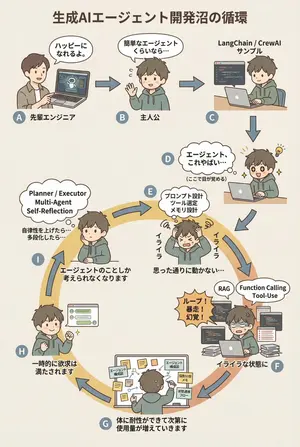
AI Agent Development 'Swamp' Diagram Prompt - Nano Banana Pro AI Prompt for Infographic / Edu Visual
diagram: title: "生成AIエージェント開発沼の循環 (図のタイトル)" style: character: "simple_editorial_cute" tone: "light_like_original" line: "soft_round" shading: "flat_minimal" palette: "muted_editorial" background: "light_beige_or_white" rule: first_character_only: "最初の人物のみ別人" others_same_character: "それ以外は全て同一人物" anxiety_requires_tech_terms: true dialogue_tone: "元図の短く軽い言い回しを維持" layout: intro_track: "上段は直線(左→右)、その後に下へ落ちて円環へ合流" loop_track: "円環(輪)として配置し、矢印は円周に沿って時計回りにカーブ" nodes: # ===== 上段:直線導入 ===== - id: A zone: "intro" position: "upper_left" actor: "別人(先輩エンジニア)" visual: "ラップトップを指差す" item: "AIエージェントのデモ画面" says: "ハッピーになれるよ。" arrow_to: { id: B, shape: "straight", direction: "right" } - id: B zone: "intro" position: "upper_center" actor: "主人公(同一人物)" visual: "軽く手を振る" says: "簡単なエージェントくらいなら…" arrow_to: { id: C, shape: "straight", direction: "right" } - id: C zone: "intro" position: "upper_right" actor: "主人公(同一人物)" visual: "サンプルコードを実行" item: "LangChain / CrewAI サンプル" arrow_to: { id: D, shape: "straight", direction: "down" } # ===== D:覚醒ポイント ===== - id: D zone: "connector" position: "right_outer_before_loop" actor: "主人公(同一人物)" visual: face: "目が見開く(かわいい)" effect: "小さなひらめき線" posture: "前のめり" state: "覚醒" says: "エージェント、これやばい…" micro_text: "(ここで目が覚める)" arrow_to: id: E shape: "gentle_curve" direction: "down_into_ring" # ===== 円環開始(必ずここから回る)===== - id: E zone: "loop" position: "loop_right_upper" actor: "主人公(同一人物)" visual: "頭を抱える(かわいい)" state: "不安・イライラ開始" says: "イライラ" thought_terms: - "プロンプト設計" - "ツール選定" - "メモリ設計" thought_text: "思った通りに動かない…" arrow_to: { id: F, shape: "curved_along_ring", direction: "clockwise" } - id: F zone: "loop" position: "loop_right_lower" actor: "主人公(同一人物)" visual: "コードとログに囲まれる" state: "イライラが定着" says: "イライラな状態に" callout: "ループ!暴走!幻覚!" thought_terms: - "RAG" - "Function Calling" - "Tool-Use" arrow_to: { id: G, shape: "curved_along_ring", direction: "clockwise" } - id: G zone: "loop" position: "loop_bottom" actor: "主人公(同一人物)" visual: "付箋と構成図だらけ" says: "体に耐性ができて次第に使用量が増えていきます" items: - "エージェント構成図" - "役割分担メモ" - "状態遷移フロー" arrow_to: { id: H, shape: "curved_along_ring", direction: "clockwise" } - id: H zone: "loop" position: "loop_left_lower" actor: "主人公(同一人物)" visual: "うまく動いて小さくガッツポーズ" state: "一時的満足" says: "一時的に欲求は満たされます" arrow_to: { id: I, shape: "curved_along_ring", direction: "clockwise" } - id: I zone: "loop" position: "loop_left_upper" actor: "主人公(同一人物)" visual: "また考え込む" state: "執着・思考占有" says: "エージェントのこと3f:Teea,diagram: title: "The Cycle of the Generative AI Agent Development Swamp (diagram title)" style: character: "simple_editorial_cute" tone: "light_like_original" line: "soft_round" shading: "flat_minimal" palette: "muted_editorial" background: "light_beige_or_white" rule: first_character_only: "Only the first person is different" others_same_character: "All others are the same person" anxiety_requires_tech_terms: true dialogue_tone: "Maintain the short, light phrasing of the original diagram" layout: intro_track: "The upper section is a straight line (left to right), then drops down to join the loop" loop_track: "Arranged as a loop (ring), with arrows curving clockwise along the circumference" nodes: # ===== Upper Section: Straight Introduction ===== - id: A zone: "intro" position: "upper_left" actor: "Different person (Senior Engineer)" visual: "Pointing at a laptop" item: "AI Agent Demo Screen" says: "It'll make you happy." ar

Whimsical Programmer Almanac Infographic
{ "type": "watercolor infographic almanac", "style": "hand-drawn, Little Prince theme, cream background, scattered stars", "header": { "date": "{argument name=\"date\" default=\"2026年4月18日\"}", "title": "{argument name=\"main title\" default=\"vibe coding 老黄历\"}", "subtitle": "丙午年 三月初二 星期六" }, "layout": { "sections": [ { "title": "宜", "position": "top-left", "count": 5, "labels": [ "{argument name=\"first do item\" default=\"跟着感觉写代码\"}", "和AI聊一聊再开工", "删掉不对的,保留有趣的", "给项目起一个浪漫的名字", "喝杯咖啡,让思路长出来" ] }, { "title": "今日天象 & 编程运势", "position": "top-right", "count": 4, "labels": [ "月亮进入双子座", "灵感流动,适合对话与创造。", "5 stars", "灵感 90% 调试 65% 成就感 88%" ] }, { "title": "忌", "position": "mid-left", "count": 5, "labels": [ "{argument name=\"first dont item\" default=\"一上来就写完美架构\"}", "纠结技术选型到天黑", "害怕报错,不敢运行", "复制粘贴不思考", "忘记保存与提交" ] }, { "title": "今日吉时", "position": "bottom-left", "count": 2, "labels": [ "09:30 - 11:30 灵感正旺", "14:00 - 16:00 敲出惊喜" ] }, { "title": "幸运指令", "position": "bottom-left", "count": 4, "labels": [ "git add .", "git commit -m \"follow the vibe\"", "git push", "# 宇宙会帮你编译的" ] }, { "title": "今日心法", "position": "bottom-right", "count": 1, "labels": [ "不必成为最厉害的程序员,只需成为最有感受力的创造者。让感觉引路,让代码开花。" ] } ], "illustration": { "position": "center-right", "subject": "Little Prince on asteroid with laptop, fox, rose in glass dome, mug", "quote": "{argument name=\"quote\" default=\"重要的东西,用眼睛是看不见的,要用代码和心去感受。\"} —— 小王子与程序员", "sticky_notes": { "count": 3, "labels": [ "先跑起来再说。", "让AI陪你探索。", "bug也是礼物。" ] } } } }3d:Ta73,{ "type": "watercolor infographic almanac", "style": "hand-drawn, Little Prince theme, cream background, scattered stars", "header": { "date": "{argument name=\"date\" default=\"2026年4月18日\"}", "title": "{argument name=\"main title\" default=\"vibe coding 老黄历\"}", "subtitle": "丙午年 三月初二 星期六" }, "layout": { "sections": [ { "title": "宜", "position": "top-left", "count": 5, "labels": [ "{argument name=\"first do item\" default=\"跟着感觉写代码
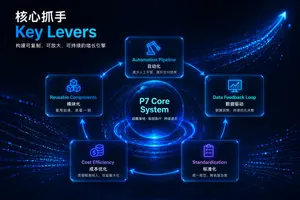
Futuristic Tech Strategy Slide
{ "type": "presentation slide infographic", "style": { "theme": "{argument name=\"theme color\" default=\"neon blue\"}", "background": "{argument name=\"background style\" default=\"dark blue futuristic tech with glowing data streams and an ascending arrow\"}" }, "header": { "title": "{argument name=\"main title\" default=\"核心抓手\"}", "subtitle": "{argument name=\"english title\" default=\"Key Levers\"}", "description": "构建可复制、可放大、可持续的增长引擎" }, "layout": { "type": "circular flow diagram", "center_node": { "title": "{argument name=\"center node title\" default=\"P7 Core System\"}", "subtitle": "战略落地 · 高效执行 · 持续进化", "visual": "glowing tech sphere" }, "surrounding_nodes": { "count": 5, "connection": "glowing blue arrows forming a clockwise cycle", "nodes": [ { "position": "top", "icon": "robotic arm", "english_label": "Automation Pipeline", "chinese_label": "自动化", "description": "减少人工干预,提升交付效率" }, { "position": "right", "icon": "monitor with chart", "english_label": "Data Feedback Loop", "chinese_label": "数据驱动", "description": "数据洞察,持续优化决策" }, { "position": "bottom right", "icon": "clipboard with checkmarks", "english_label": "Standardization", "chinese_label": "标准化", "description": "统一规范,降低复杂度" }, { "position": "bottom left", "icon": "coins", "english_label": "Cost Efficiency", "chinese_label": "成本优化", "description": "资源精准投入,效益最大化" }, { "position": "left", "icon": "stacked cubes", "english_label": "Reusable Components", "chinese_label": "模块化", "description": "复用加速,质量一致" } ] } } }
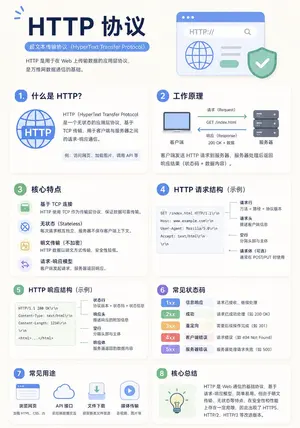
Minimalist Educational Infographic Template
Create a infographic image of Minimalist Educational Infographic Template. Style: photorealistic. Composition: balanced and well-framed. Lighting: natural with cinematic mood. Category: illustration. Reference: minimalist-educational-infographic-template-16270.
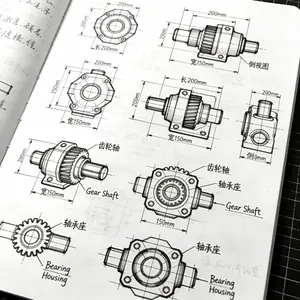
Explore more prompts
Browse more AI image and video prompts by category.
FAQ
- How does the prompt keep the character identical across all eight slides?
- It explicitly instructs to use REFERENCE_0 as the base and preserve outfit, mask, hairstyle and cyberpunk details while only varying pose and expression per slide.
- What exact topics are covered in the eight slides?
- Opening overview with five automation examples, definition of sub-agents, before/after need explanation, code reviewer flow, test writer workflow, security scanner risk levels, cost optimization via model switching, and a three-step start-today summary.