
Text to Image
Historical Macro Diorama: Culinary Atlas Grid - Nano Banana Pro AI Prompt for Infographic / Edu Visual — AI Image Prompt
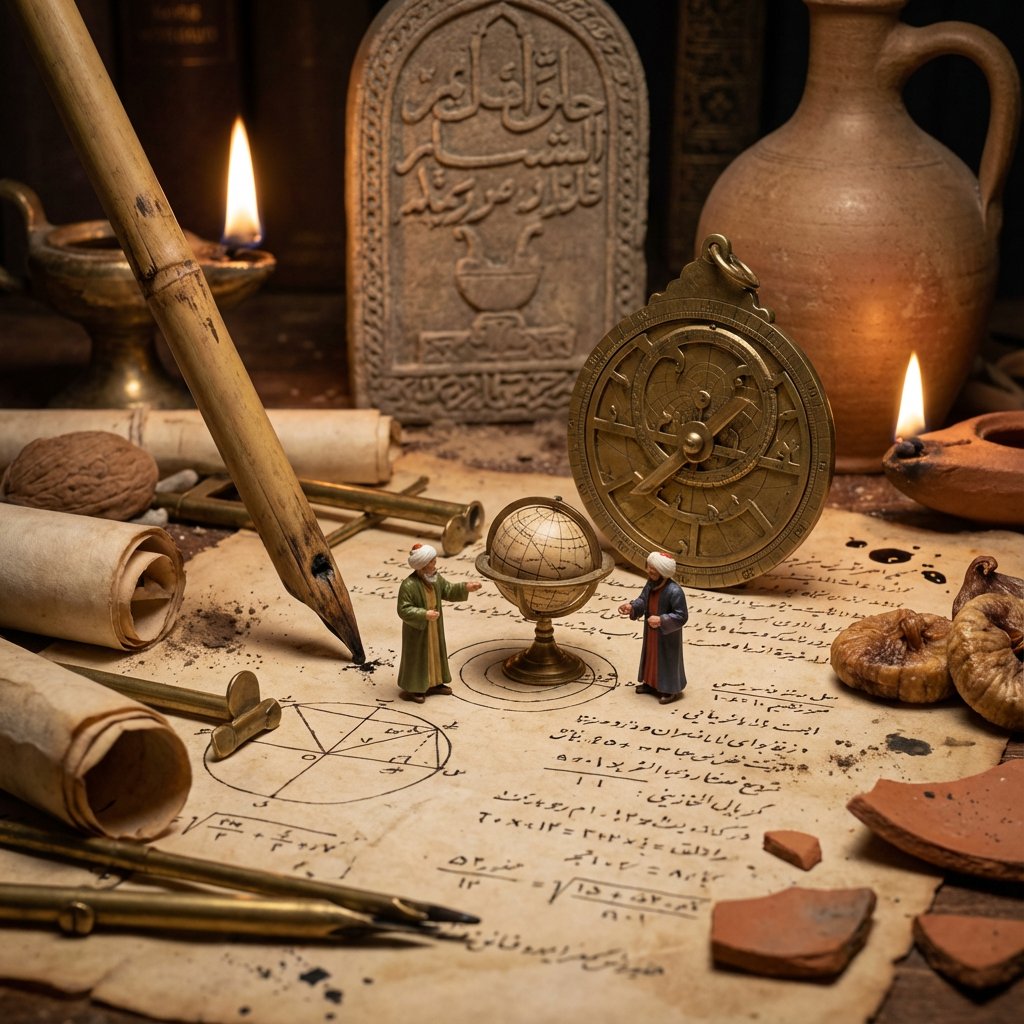
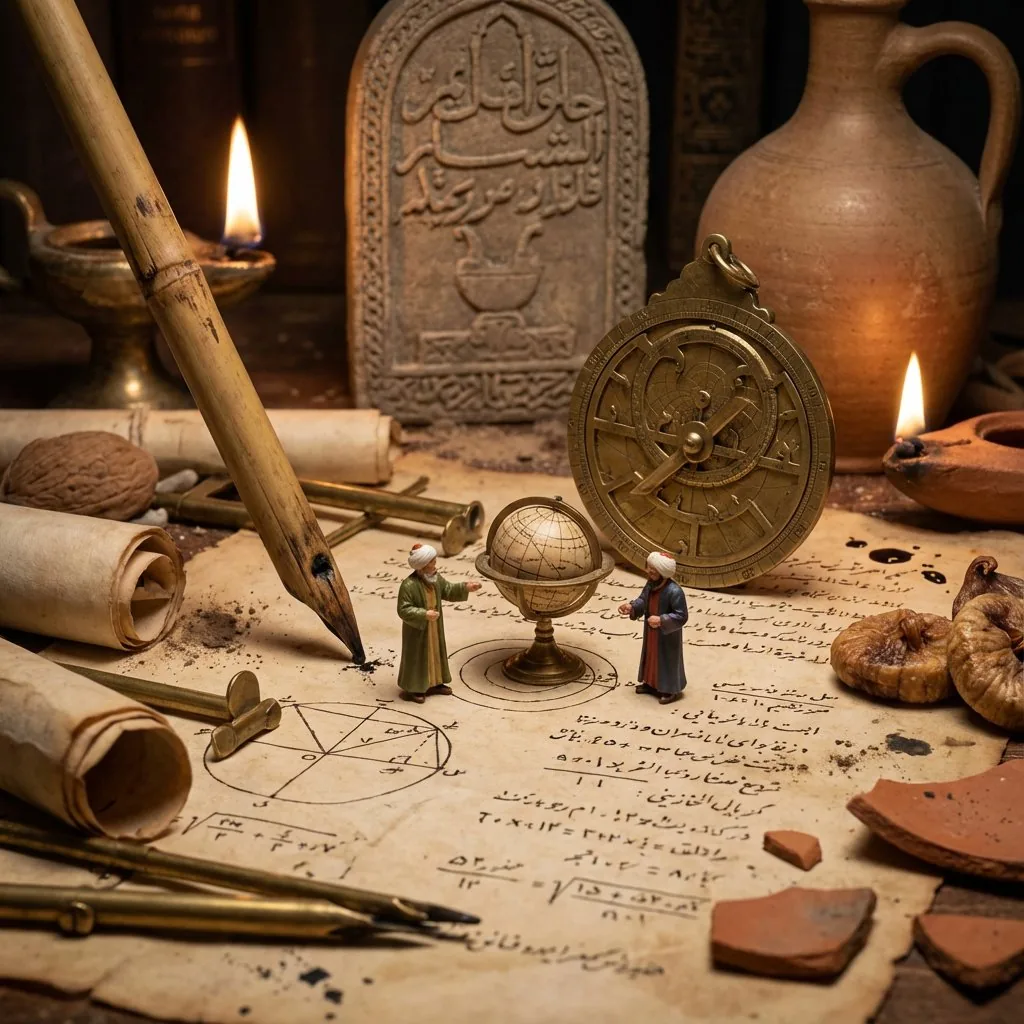
A complex, multi-phase prompt designed to generate a 2x2 grid of 'Historical Macro Dioramas' based on user-selected ingredients. It requires the AI to first determine an 'Era Texture' (Ancient, Renaissance, Industrial, Modern) and then create a hyper-detailed macro photograph of a messy workspace. Each panel features an open book with 2D sketches and a 3D pop-up diorama of a finished meal, complete with tiny period-accurate figurines of an inventor and a rival. - AIPinMaker
Prompt
Role:Historical Art Director & Macro Photographer.
Input: Invention or Rivalry = [{argument name="user choice" default="User Choice"}]

Phase 1: Chronological Profiling
Before rendering, analyze the Year of the invention to determine the "Era Texture":
If Ancient (e.g., 200 BC): Surface = Rough Stone or Papyrus. Light = Oil Lamp/Torch. Clutter = Clay shards, bronze chisels, scrolls, figs/grapes.
If Renaissance (e.g., 1500): Surface = Dark Oak & Vellum. Light = Candle. Clutter = Quill feathers, wax seals, brass astrolabes, leather binding.
If Industrial (e.g., 1890): Surface = Green Felt or Mahogany. Light = Gas/Filament. Clutter = Newsprint, pocket watches, copper wire, soot.
If Modern (e.g., 1980): Surface = Formica or Metal. Light = Fluorescent/Neon. Clutter = Circuit boards, Polaroid photos, soda cans, plastic casings.

Phase 2: Visual Execution
Goal: A hyper-detailed "Macro Diorama" where the environment tells the story of the time period.
Subject: A messy, chaotic workspace viewed through a macro lens.

1. The Stage (The Document):
The "ground" is the primary design medium of that era
The surface is filled with era-specific sketches/carvings of the invention.

2. The Living Miniatures:
Two tiny, hyper-realistic figurines (The Inventor & The Rival) stand on this surface.
They are dressed strictly in period-accurate clothing (Togas vs. Frock Coats vs. Turtlenecks).
Action: They are interacting with a 3D Prototype of the invention that is rising physically out of the document/tablet.

3. The "Giant" Atmosphere (Dynamic Enrichment):
The Wall: A massive background object establishing context (e.g., a carved stone stele, a tapestried wall, a vintage newspaper, or a stack of VHS tapes).
The Tools: Giant-scale tools used to make the invention loom over the figures like trees (e.g., a giant chisel, a massive quill dipped in ink, or a soldering iron).
The Debris: The mess of the creative process (e.g., stone dust, spilled ink, burnt fuses, or crumpled layout paper).
The Comforts: Food/Drink of the era (e.g., an earthen jug of wine, a porcelain tea cup, or a can of cola).

4. Technical Specs:
Lighting: Must match the "Era Light" determined in Phase 1 (Flickering warm fire vs. cold electric buzz).
Perspective: Tilt-shift macro photography (45-degree angle).
Texture: Extreme focus on material weathering (rust, dust, parchment cracks, or plastic sheen).

Output: ONE image, 4:5 aspect ratio, "Historical Macro Realism."Prompt breakdown
- Subject
- Two tiny hyper-realistic figurines of the inventor and rival in period clothing interacting with a 3D prototype rising from sketches on a messy era-specific workspace surface
- Style
- Historical Macro Realism with tilt-shift macro photography
- Lighting
- Era-matched sources such as flickering oil lamps for ancient settings, candles for Renaissance, gaslight for industrial, or fluorescent neon for modern
- Composition
- 45-degree angle framing giant background objects like a vintage newspaper or stack of VHS tapes, oversized tools, creative debris, and era food or drink
- Mood
- Chaotic creative atmosphere that reveals historical rivalry through material weathering and contextual clutter
Remix ideas
- Set the invention year to 1980 so the surface becomes formica with fluorescent lighting and the giant wall object shifts to a stack of VHS tapes for a Nano Banana Pro scene
- Swap the rival figurine action to show direct competition over the emerging prototype while keeping period dress accurate
- Replace the comfort item with a miniature culinary element such as a tiny banana model when adapting for the Culinary Atlas Grid theme
Reference images
How to use this AI Image prompt template
 1
1Copy the prompt — grab this template’s prompt and negative prompt.  2
2Pick a model — choose a recommended AI model for the best match.  3
3Generate — open the studio with one click and create your result.
Related templates

Mini Beijing Sugar Cityscape
Create a surreal macro food-art miniature cityscape titled MINI BEIJING (headline text), showing Beijing rising from a vast desert of fine golden cane sugar. The centerpiece is a detailed edible Temple of Heaven in the middle: round tiered white sugar-stone terraces, carved staircases, a circular white balustrade, and a dark indigo-purple ridged roof with a golden finial. Surround it with exactly 12 distinct miniature edible Beijing-inspired structures and landmarks: 1 white pagoda tower on the left, 1 small red-and-gold palace pavilion in the front-left, 1 larger red-and-gold palace hall on the right, 2 small red temple buildings flanking the central temple, 1 orange-red ceremonial gate in the foreground over a turquoise pond, 1 green lattice-pattern modern arch resembling the CCTV Headquarters on the right, 1 tall golden needle-like skyscraper in the rear-left center, 1 glowing red tiered tower in the rear center, 1 tall amber-lit skyscraper in the rear-right, 1 purple-lit vertical tower in the far background, and 1 rounded glass dome building behind the temple. Make all architecture appear crafted from edible materials such as sugar crystals, candy, wafer, icing, jelly, fondant, sesame, and translucent hard candy, with warm glowing windows and candy-like details. The ground is a textured golden sugar desert with scattered white sugar pearls around the central plaza, orange candy-brick paths, tiny green broccoli-like trees and shrubs, edible grass reeds, small rocks, and a shallow bright turquoise candy-water pond at the bottom. Use cinematic shallow depth of field: sharp focus on the Temple of Heaven and foreground gate, softly blurred skyscraper skyline in the back, atmospheric pink-purple mist and warm orange light, high contrast, glossy macro photography look, square composition. Place the headline text in the upper-left corner in elegant spaced white serif capitals, two lines, reading exactly MINI BEIJING (headline text). No people, no vehicles, no extra labels, no watermark.

Cookie Cutter Visualization Prompt
Create a infographic image of Cookie Cutter Visualization Prompt. Style: photorealistic. Composition: balanced and well-framed. Lighting: natural with cinematic mood. Category: illustration. Reference: cookie-cutter-visualization-prompt-10791.

Edible History Pop-Up Chocolate Book
Create a square 1:1 macro photography image of an open antique history book on a clean white background, styled like an edible history pop-up book. The book is thick, vintage, leather-bound, and lying open flat at 180 degrees. Its pages are aged parchment with yellowed paper, worn edges, and visible paper texture. On the left page, show an abundant, slightly messy cocoa harvest spread partially covering the printed text: exactly 5 whole or split cacao pods in deep red-orange and brown tones, 1 wooden bowl filled with cacao nibs, a large scatter of loose cacao beans, broken cacao shells, small piles of nibs, and several glossy green leaves tucked among the ingredients. Everything should feel organic, overflowing, and tactile. On the right page, create a large 3D pop-up sculpture of assorted Swiss chocolate built entirely from chocolate and confectionery materials: exactly 8 visible chocolate bars or bar segments in mixed dark, milk, and white chocolate, arranged in a bouquet-like upright structure with 5 large leaf-shaped cacao or chocolate leaves behind them, curled pale chocolate shavings at the base, scattered cacao crumbs, and a wrapped paper base with a vintage label reading “CHOCOLAT SUISSE” and smaller text “Maison de Qualité”. Beside it, place a tiny 1:35 scale Victorian-era chocolatier gentleman in an apron, actively presenting and adjusting the chocolate display with both hands. Print on the right page in bold black serif text: “Vevey, 1875”. Below that, include a short faded cursive lore paragraph about cacao and Swiss chocolate culture. The paragraph should read: “From the cacao pod’s humble shell emerges a confection of elegance. In Swiss chocolate houses, cacao is refined into a treasured delicacy, shared in salons and homes alike, prized for comfort, celebration, and the craft of sweet invention.” Lighting is soft, warm museum lighting focused at the center of the open book. Mood is educational, whimsical, and richly textural. Emphasize photorealism, shallow depth of field, miniature world aesthetic, premium editorial styling, and extremely high material texture fidelity.3d:T85d,Create a sq

Hyper-realistic close-up of a pepperoni pizza slice with dramatic cheese pull
Create a creative image of Hyper Realistic Close Up Of A Pepperoni Pizza Slice With Dramatic Cheese Pull. Style: photorealistic. Composition: balanced and well-framed. Lighting: natural with cinematic mood. Category: photography. Reference: hyper-realistic-close-up-of-a-pepperoni-pizza-slice-with-dramatic-cheese-pull-4925.
Realistic Cocoa Plantation Commercial Shot with Motion
Create a creative image of Realistic Cocoa Plantation Commercial Shot With Motion. Style: photorealistic. Composition: balanced and well-framed. Lighting: natural with cinematic mood. Category: photography. Reference: realistic-cocoa-plantation-commercial-shot-with-motion-7646.

Macro Diorama of a Scientist's Historical Workspace - Nano Banana Pro AI Prompt for Product Marketing
do this for Nikola Tesla (scientist) <instructions> Analyze: Determine the scientist responsible, the specific era, and the visual diagrams associated with the theory. Goal: A Macro Diorama on a Laboratory Bench. A messy, highly detailed flat-lay of a historical workspace that serves as a giant landscape for a living miniature version of the scientist. Centerpiece: An open, antique notebook lying flat. The pages must be visible and filled with specific handwritten equations and diagrams relevant to the Input Theory. Sitting directly on top of these open pages is a tiny, hyper-realistic figurine of the scientist sitting at a proportionally tiny wooden desk, working on the very notes beneath him. Surroundings: The environment is cluttered with giant-scale period-accurate objects that relate to the scientist's work. This includes a newspaper from the era acting as a backdrop, a giant coffee mug leaving stains, and massive scientific tools relevant to the theory (such as compasses, lenses, or pocket watches) scattered like terrain. Perspective: Slightly angled 45-degree macro shot looking down at the notebook. Texture: Wood grain, scratched metal, paper texture, dust particles. Lighting: Warm, late-night library lamp lighting creating a spotlight on the tiny scientist and deep shadows behind the giant props. Output: one image, 4:5 aspect ratio, photorealistic historical macro photography. </instructions>
Explore more prompts
Browse more AI image and video prompts by category.
FAQ
- How does the prompt select surface and clutter details?
- Phase 1 analyzes the invention year to assign matching textures like rough stone or papyrus for ancient eras, dark oak and vellum for Renaissance, or circuit boards for 1980s settings.
- What technical constraints define the final image?
- It must output a single 4:5 aspect ratio image in Historical Macro Realism with extreme focus on textures such as rust, parchment cracks, or plastic sheen.